The Project
It all began with a purely visual seduction. These abandoned shopfronts, with their faded signs, rusted shutters and blind windows — some worthy of a film set — first stopped me for their formal beauty alone and the singular atmosphere they exuded. Something between melancholy and nostalgia for a fantasised past. Then, over thousands of kilometres travelled by motorbike through rural France and countless encounters with villagers, the project changed in nature.
“What I was photographing was not simply beautiful. It was a reality in the process of disappearing.”
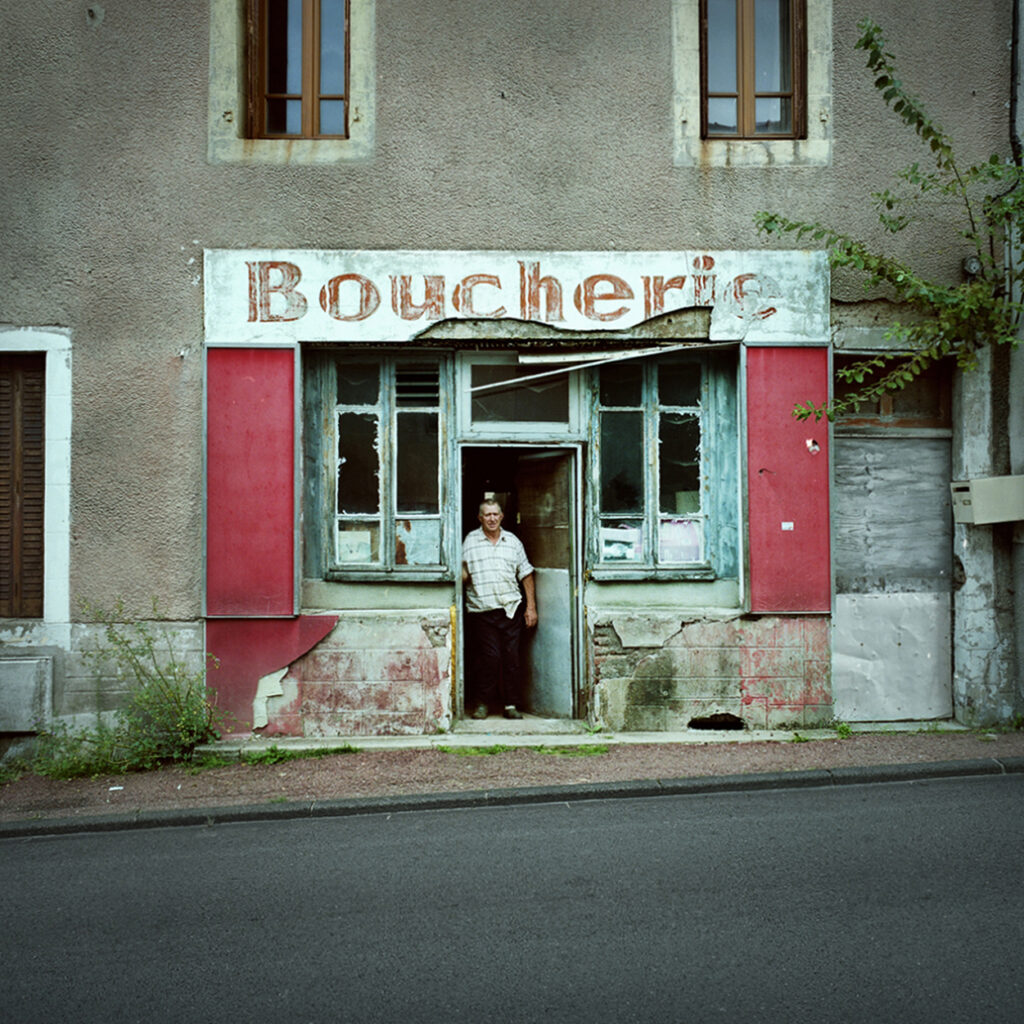
For over ten years, I have been documenting the closure of local businesses in rural areas. Bakers, grocers, cafés, hardware stores, haberdasheries — these places that once formed the living fabric of villages. Photographed 90% on film in 6×6 format, these images carry in their very grain something of duration, resistance, and perhaps irreversibility.
“There is in the very act of photographing something that resembles a promise: that of offering these façades a form of eternity, of fixing them in light so that they may not disappear a second time.”
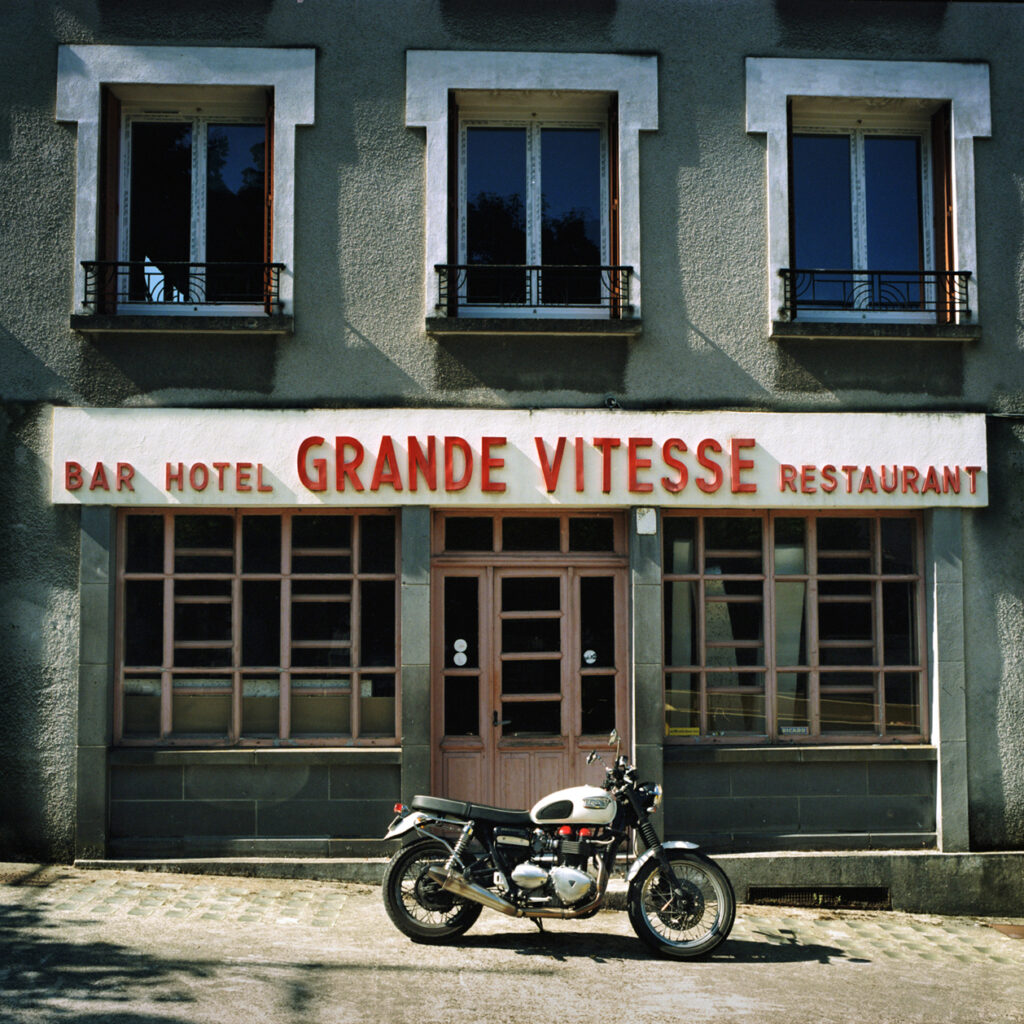
The causes of this desertification are well known and multiple: the rise of supermarkets, the transformation of consumer habits, the improvement of road infrastructure that made out-of-town shopping centres more accessible, and the economies of scale that crush small businesses.
“Each factor taken in isolation might seem surmountable. Combined, they have produced a silent and methodical erasure.”
The Covid crisis had opened a breach. A moment when people collectively believed a reversal was possible. City dwellers left the cities, rural communities spoke of relocalisations, short supply chains, reinvestment in local commerce. But once the crisis passed, old habits returned. Large companies reversed their remote working policies, newcomers found their way back to the supermarkets. The surge never came.
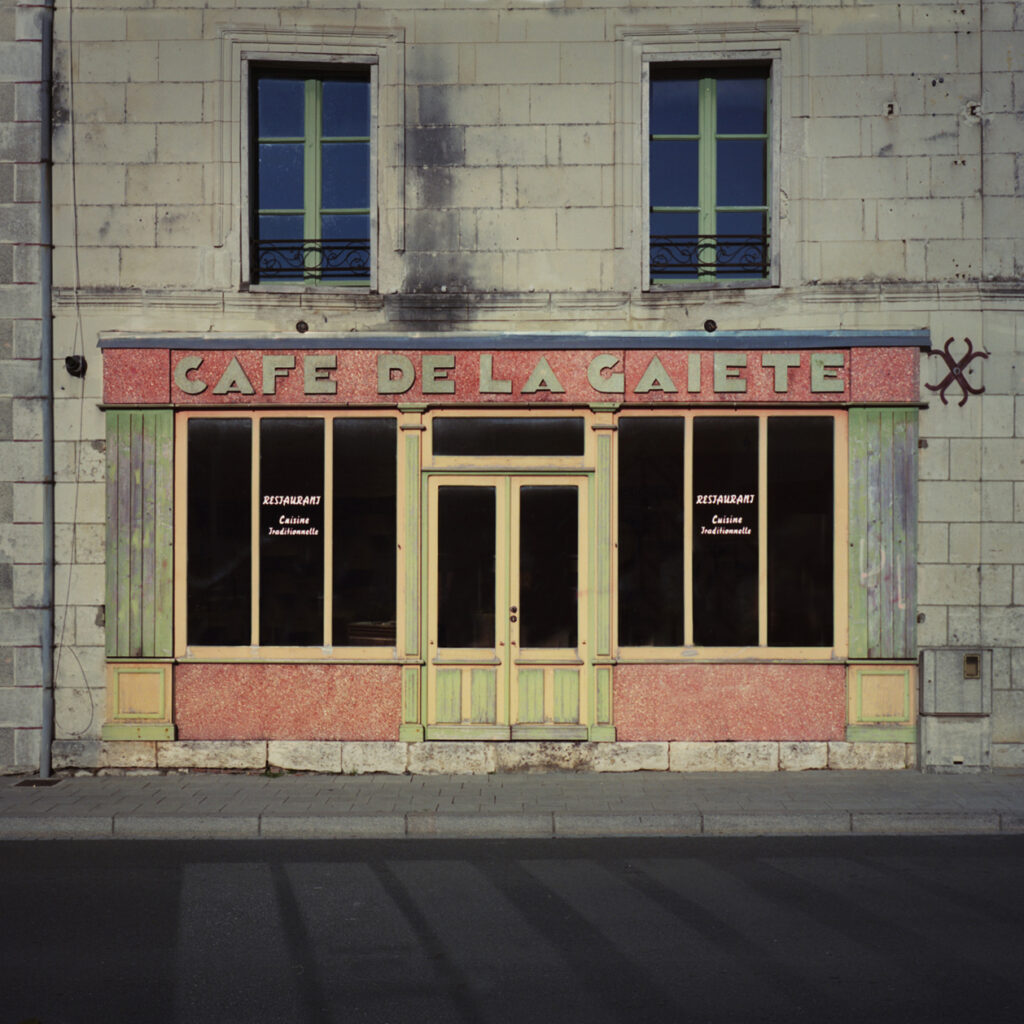
The consequences of this commercial desertification go far beyond the economic.
“These are places of sociability that are disappearing — those informal spaces where people crossed paths, exchanged words, where bonds between neighbours formed without a second thought.”
Their absence carves out a silent isolation, reinforces individualism, and concentrates ever more power in the hands of large retail groups, now the sole masters of prices and territories.
This work is part of a tradition of French documentary photography to which I feel indebted without claiming to compare myself. One thinks of the great photographic missions commissioned by the DATAR in the 1980s, which tasked photographers — including Raymond Depardon — with looking unflinchingly at the mutations of the French territory.
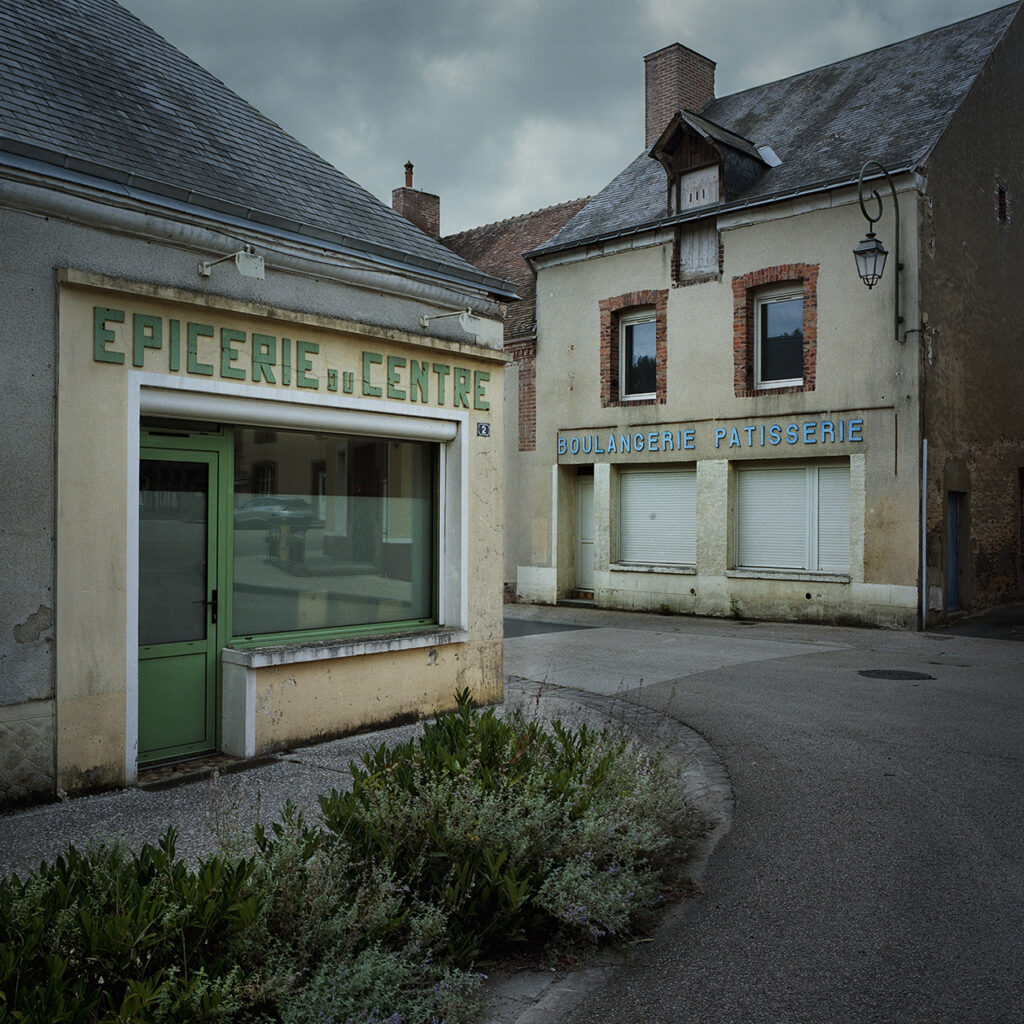
Those missions had a rare ambition: to document the mutations of the territory in order to better understand them, and perhaps avoid suffering them blindly. Today, this type of public commission has largely disappeared, for lack of budget — as though looking at ourselves in the mirror had become an accessory luxury.
“These projects were aesthetic as much as political. Mine has become so.”